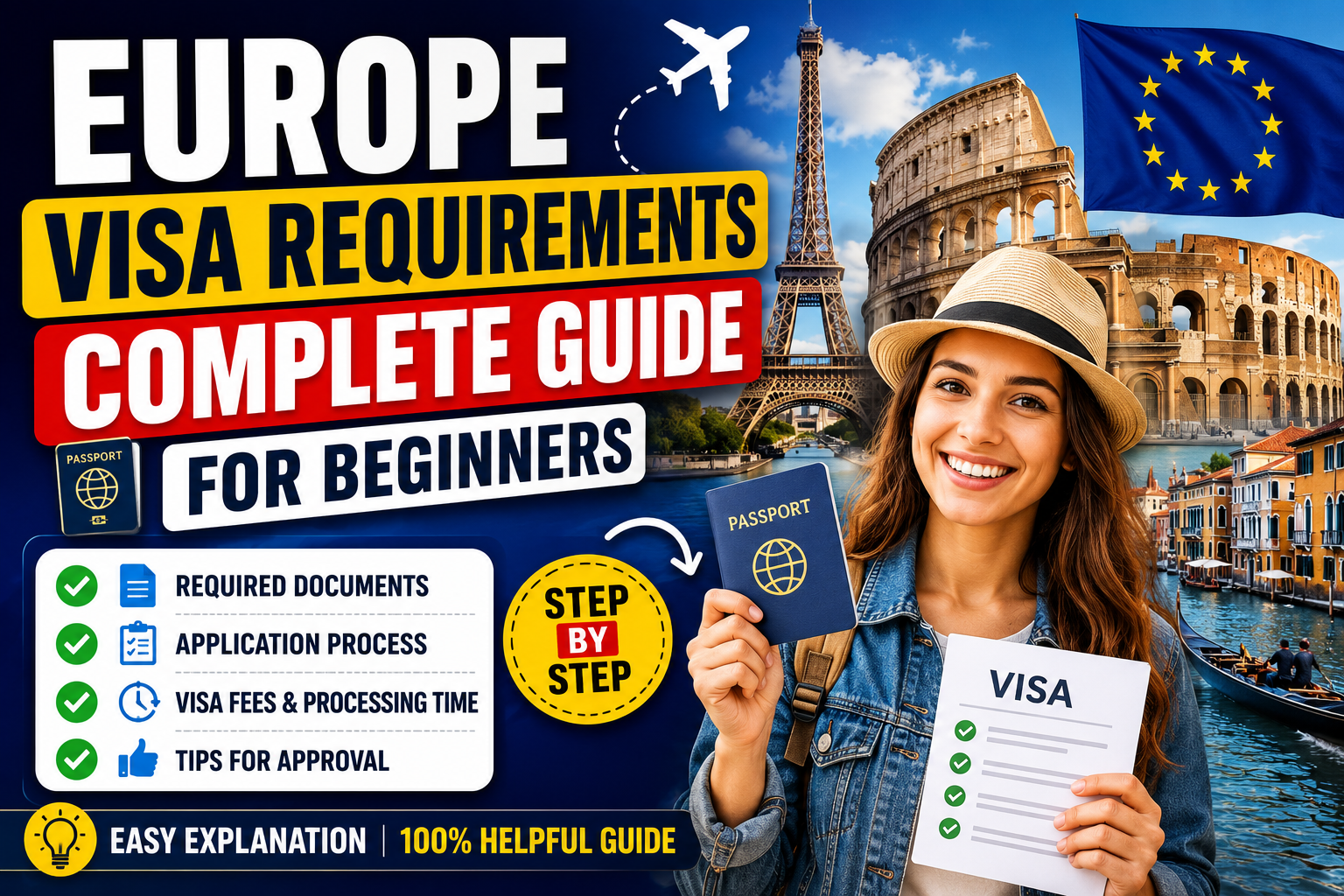
Europe Visa Requirements Guide for Beginners
Traveling to Europe is a dream for millions of people. From the beautiful streets of Paris to the historic landmarks of Rome, Europe offers unforgettable experiences for tourists, students, and business travelers. However, before planning your trip, understanding Europe visa requirements is extremely important.
Many beginners feel confused about documents, visa rules, and application procedures. Fortunately, this guide explains everything in a simple and easy way. Whether you are applying for a tourist visa or a short stay visa, this article will help you understand the process confidently.
What Is a Europe Visa?
A Europe visa allows foreign travelers to enter European countries legally for tourism, business, study, or family visits. In most cases, travelers apply for a Schengen visa, which permits movement across multiple European countries with one visa.
The Schengen Area includes popular destinations such as:
- France
- Germany
- Italy
- Spain
- Netherlands
Therefore, one visa can help you visit multiple countries during your trip.
Types of Europe Visas
Different travelers need different types of visas. Choosing the correct category is very important.
Tourist Visa
This visa is for vacations, sightseeing, and short family visits.
Business Visa
Business travelers use this visa for meetings, conferences, or professional events.
Student Visa
Students applying for educational programs in Europe usually require a study visa.
Transit Visa
This visa is used when travelers pass through a European airport while traveling to another country.
Basic Europe Visa Requirements
Before applying, prepare all required documents carefully. Missing information can delay your application or cause rejection.
Valid Passport
Your passport should:
- Be valid for at least six months
- Have blank pages available
- Be in good condition
Visa Application Form
Fill out the official visa application form carefully and honestly.
Passport Size Photos
Most embassies require recent biometric photographs with a white background.
Travel Itinerary
You may need:
- Flight reservations
- Hotel bookings
- Travel plans
Proof of Financial Support
Applicants must show they can afford travel expenses. Usually, bank statements from the last three to six months are required.
Travel Insurance
Europe visa rules often require travel medical insurance covering emergencies and hospitalization.
Proof of Employment or Study
You may also need:
- Salary slips
- Job letter
- Business registration
- Student enrollment proof
As a result, the embassy can verify your financial and personal stability.
How to Apply for a Europe Visa
The application process becomes easier when you follow proper steps.
Step 1: Choose Your Destination Country
First, decide which European country you will visit the longest. Usually, you must apply through that country’s embassy.
Step 2: Book Visa Appointment
Most embassies require online appointments before document submission.
Step 3: Prepare Documents
Arrange all documents neatly. Moreover, keep both original documents and photocopies ready.
Step 4: Attend the Interview
Some applicants may need a short visa interview. During the interview:
- Answer honestly
- Stay calm
- Provide accurate details
Step 5: Wait for Processing
Visa processing times vary. In many cases, it takes around 15 to 30 days.
Common Europe Visa Mistakes to Avoid
Many beginners make avoidable errors during the application process.
Incomplete Documents
Missing bank statements or incorrect forms can cause delays.
Fake Information
Never provide false information because embassies verify documents carefully.
Weak Financial Proof
Low bank balance or unclear income sources may reduce approval chances.
Last Minute Applications
Apply early to avoid stress and unexpected delays.
Tips to Increase Europe Visa Approval Chances
Maintain a Good Bank Balance
A stable financial history improves your visa profile significantly.
Show Strong Ties to Your Country
Job letters, business ownership, or family responsibilities help prove that you will return home after your visit.
Keep Your Travel History Strong
Previous international travel can positively impact your application.
Submit Organized Documents
Professional and complete documentation creates a strong impression.
How Much Does a Europe Visa Cost?
Visa fees depend on the visa category and applicant age. Additionally, you may pay extra service charges if applying through visa centers.
Children sometimes receive discounted fees, while some categories may qualify for exemptions.
Final Thoughts
Understanding Europe visa requirements is the first step toward a successful international journey. Although the process may seem complicated initially, proper planning makes everything easier.
By preparing accurate documents, following embassy instructions, and applying honestly, beginners can improve their chances of visa approval. Most importantly, stay patient and organized throughout the process.
A well prepared Europe visa application can open the door to unforgettable travel experiences across some of the world’s most beautiful countries.